
Laboratory sustainability: How ELGA is helping labs reduce their environmental footprint
2 Set 2026
Laboratories sit at the heart of scientific progress, underpinning the medical breakthroughs, drug development and clinical diagnostics that improve and extend lives. But that progress comes at an environmental cost. Labs are among the most resource-intensive work environments, consuming five to ten times as much energy per square foot as a typical office.1
Most researchers are aware of this footprint, with over 60% already making sustainability-centered changes in their day-to-day laboratory work and 84% wanting to do more.2 However, good intentions are no longer the only driver. Regulatory changes, funding requirements and procurement standards are all raising the bar, elevating sustainability from a nice-to-have into a business necessity.
The good news is that reducing environmental impact doesn't have to mean slowing down your science. This blog examines the true scale of the laboratory sustainability challenge, the pressures driving urgent action and how better lab water technology can help labs operate more sustainably.
The environmental cost of modern labs
Labs carry an outsized energy, water and waste load relative to their physical footprint. Understanding where that impact comes from is the first step to reducing it.
Energy
Most labs never fully switch off. Energy-intensive incubators and ultra-low-temperature (ULT) freezers run around the clock, 365 days a year. Given that a single standard-efficiency ULT freezer set to -80°C can consume as much energy as a small household per year—and most research facilities run multiple—cold storage is a significant factor in laboratory sustainability.3,4
The strict air change rates needed to keep researchers safe mean that heating, ventilation and air conditioning (HVAC) systems are another major source of energy consumption in laboratories. Unlike lighting and bench instruments, which can be switched off at the end of the day, reducing the energy consumption of cold storage and HVAC systems largely depends on the efficiency of the systems themselves.
Water
Water is intrinsic to almost every lab process, from glassware washing and rinsing to reagent preparation and equipment cooling. Due to its ubiquitous nature, water is often treated as effectively limitless.
However, producing ultrapure water typically entails rejecting a substantial amount of feedwater; many purification systems reject 3–5 liters of feedwater for every liter of pure water produced.5 A lab running high volumes of purity-critical work can therefore consume several times the water it actually uses.
Hazardous waste
Waste streams such as reactive chemicals and solvents often require specialist handling and disposal, contributing to financial and administrative burden as well as environmental impact. Traditional UV lamps used in water purification systems, for example, contain mercury and are thus classified as hazardous waste once spent. They must be kept intact, stored in sealed and labeled containers and collected by a licensed hazardous waste contractor, with any breakage triggering spill and exposure procedures.6
The consequences of improper hazardous waste disposal are significant: it can cause lasting harm to local ecosystems and water sources and leave the institution exposed to regulatory penalties and reputational damage. As such, many labs are now looking to remove hazardous materials from workflows where suitable alternatives exist.
Plastic and microplastic waste
With a single PCR test consuming as much as 30g of plastic, few work environments rely on single-use plastic as heavily as the lab. Between consumables like pipette tips, plates and gloves and the packaging that reagents and consumables arrive in, labs produce almost 2% of global total plastic waste.7
In addition to the disposal of large plastics, microplastics and nanoplastics are an increasing concern. As consumables and equipment components are used and degrade, they shed microplastics into laboratory wastewater and, from there, into the wider environment, where they persist. Concerns about the effects of microplastics on human health and the environment are driving stricter regulations that are expected to include mandates for microplastic removal in the years ahead.8,9
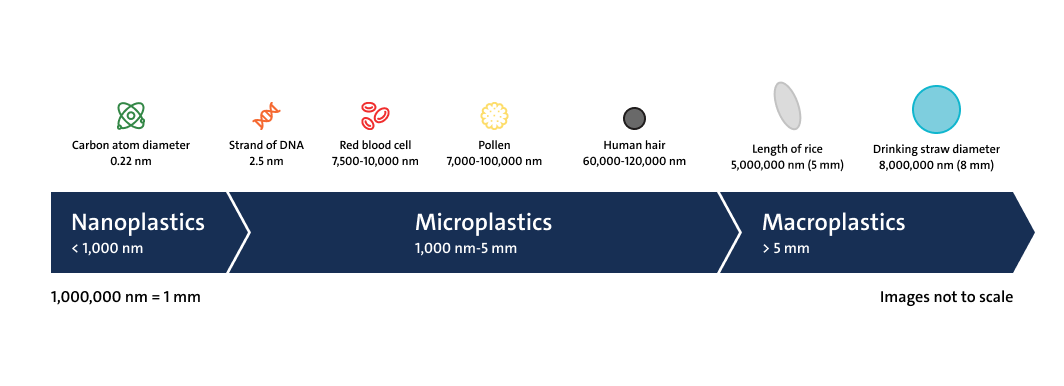
Figure adapted from Illinois Environmental Protection Agency.10
Why sustainable laboratory practices are no longer optional
For a long time, going greener in the lab was largely a matter of individual conscience—worthwhile, but easy to postpone. That's no longer the case in many parts of the world. External forces are increasingly driving sustainability efforts, and for many institutions, inaction now carries commercial and compliance risk.
Regulation is tightening
Regulation is one of the strongest forces now driving laboratory sustainability, and it's expanding in both scope and ambition. The EU Green Deal—Europe's overarching plan to become the world's first climate-neutral continent by 2050—is a clear example, setting legally binding targets that tighten standards on energy, waste and pollution.11 National net-zero commitments are applying similar pressure across the globe.
Alongside economy-wide targets, more specific rules are emerging that are directly relevant to sustainability in laboratories. Microplastics are a key focus, with frameworks such as REACH tightening the rules governing their use and release. Clinical and diagnostic applications currently benefit from certain exemptions, but these come with strict reporting obligations and are widely expected to evolve toward mandatory removal in the near future.8
Certification is gaining commercial weight
Alongside regulation, voluntary laboratory sustainability frameworks are considered an important mark of credibility:
- The Laboratory Efficiency Assessment Framework (LEAF) provides labs with a structured way to assess and improve their environmental performance
- The My Green Lab® ACT® Ecolabel provides transparent, third-party verified sustainability data on lab equipment and supplies
Both reward measurable reductions in water, energy, and waste. More and more, though, the pressure to earn these credentials isn't only reputational; it's financial.
Sustainability is influencing funding and procurement
Public grants and large tenders now frequently require evidence of environmental performance, with major funders such as Wellcome placing sustainability expectations on the research they support.12 The private sector is increasingly applying the same logic to purchasing, with procurement teams across pharma and biotech often scoring suppliers on sustainability criteria and prioritizing green lab equipment, meaning certifications like the My Green Lab ACT Ecolabel are now factored directly into buying decisions.
Our response: Engineering a more resource-efficient lab
As part of Veolia, we design our water purification technologies with ecological transformation in mind. That thinking shows up across four connected areas: reducing water waste, removing hazardous materials, designing for longevity and offsetting through reforestation.
Water-efficient technologies
ELGA systems are engineered to get more usable water from every liter drawn. Purelab® flex and Medica™ 15/30 minimize feedwater rejection through enhanced reverse osmosis (RO) recovery and an ECO Mode to reduce water and energy use when demand is low. Medica™ BIOX tackles wastewater itself, removing 95% of nanoplastics from clinical analyzer wastewater.
What this means for your lab:
- Lower water and energy utility costs
- Measurable inputs for LEAF and environmental, social and governance (ESG) reporting
- A smaller Scope 3 footprint to share with funders and procurement teams13
Mercury-free lamps
Mercury-free UV lamps, such as those in the Purelab® Chorus 1 Xe, eliminate the hazardous waste stream of traditional mercury lamps and typically last longer, too. It's a proactive choice: while research uses of mercury remain exempt under the Minamata Convention, that's unlikely to last where viable alternatives already exist.14
What this means for your lab:
- Safer handling and disposal for lab staff
- Reduced hazardous waste paperwork and disposal costs
- A stronger compliance position as regulations around mercury use in R&D tighten
Sustainable materials and design
Rather than focusing solely on the point of use, we strive to reduce impact throughout a product's entire lifecycle. Recyclable components and reduced plastic packaging cut waste, while long-life consumables and modular designs mean fewer replacements and lower shipping emissions. Several ELGA products are independently certified by My Green Lab, including the Purelab® Chorus 1 Complete, which carries an ACT Ecolabel.
What this means for your lab:
- Less plastic entering the lab's daily waste stream
- Fewer consumable orders and deliveries, reducing both administrative burden and emissions
- Verified sustainability data to support certification and reporting
Reforestation with TreeApp
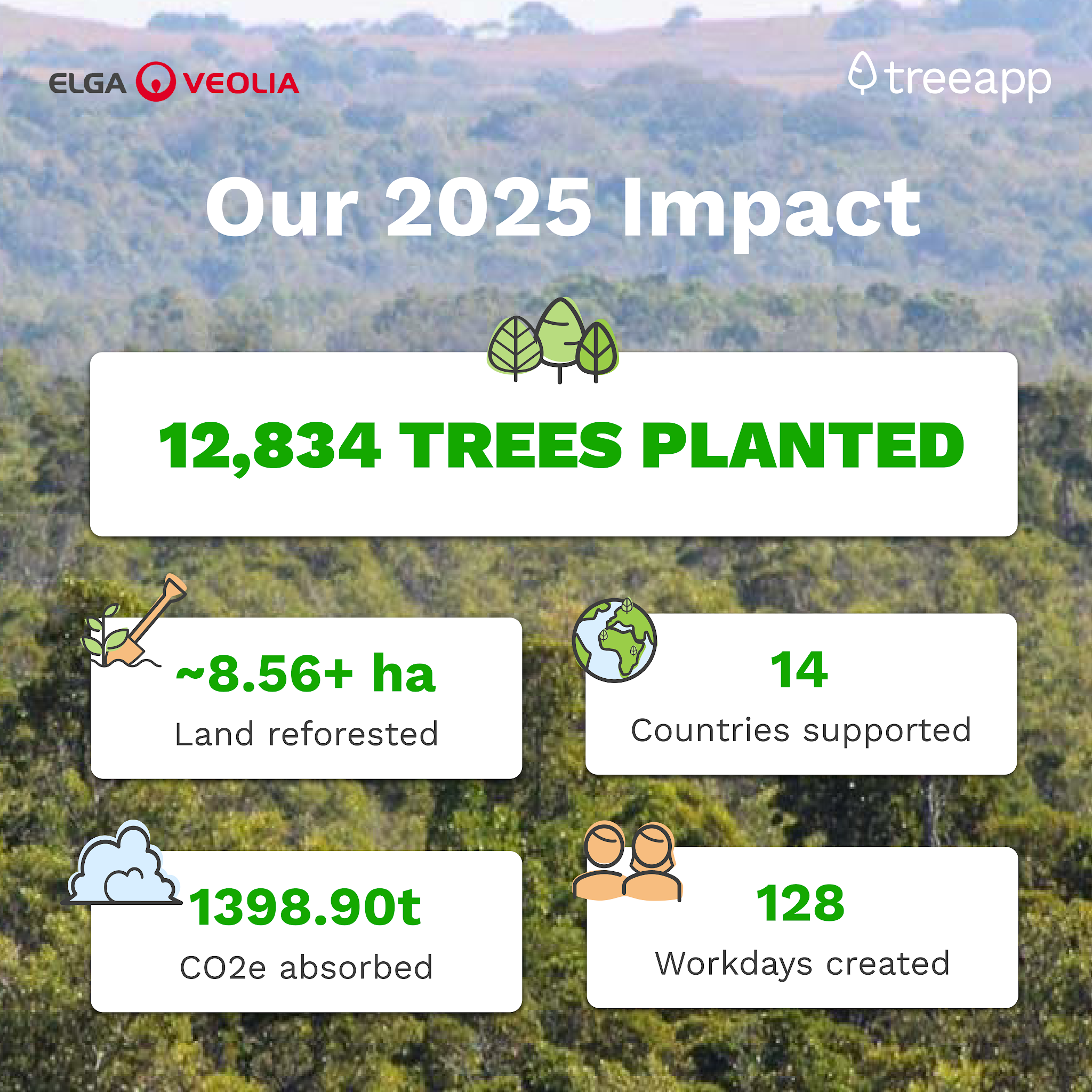
Through our reforestation partnership with TreeApp, more than 27,000 trees have been planted to date across 14 countries—restoring over 180,000 m² of land, supporting local communities through paid work and absorbing an estimated 2,981 metric tons of CO₂ over their lifetime.
What this means for your lab:
- A verifiable sustainability contribution to include in ESG and corporate social responsibility (CSR) reporting
- A credible, third-party-backed story to share with funders, auditors and staff
Sustainable water purification solutions for research and clinical labs
Labs no longer have to choose between scientific progress and environmental responsibility
Laboratories are essential to discovery, yet inherently resource-intensive. The pressure to go green is now coming from multiple directions: tightening regulations, sustainability-linked funding and scientists demanding more sustainable work environments.
The encouraging news is that meeting these demands no longer has to mean compromising on performance. ELGA designs water purification systems that tackle the biggest sources of a lab's footprint:
- Water-efficient systems cut water consumption and running costs
- Mercury-free lamps remove a hazardous waste stream
- Lifecycle-conscious design reduces lab plastic waste
- Reforestation partnership helps to offset impact beyond the lab
As part of Veolia’s broader commitment to ecological transformation, our sustainable product design supports responsible water solutions for a broad range of applications. With modular configurations, greener manufacturing processes and waste-minimizing consumables, we support high-quality scientific outcomes while reducing environmental impact.
With regulatory, reporting and procurement expectations continuing to tighten, choosing a sustainability-led supplier is increasingly becoming a strategic decision. Eventually, the question will no longer be whether labs can afford to work more sustainably, but whether they can afford not to.
Ready to build a more sustainable lab?
Book a demo of the Purelab flex or Medica 15/30 to see sustainable water purification in action.
BOOK A DEMO
References
- Improving Energy Efficiency in the Lab. Alliance to Save Energy. May 28, 2015. Accessed July 29, 2026. https://www.ase.org/blog/improving-energy-efficiency-lab
- Black D. Twelve reasons for labs to go greener. Chemistry World. Accessed July 29, 2026. https://www.chemistryworld.com/opinion/twelve-reasons-for-labs-to-go-greener/4016387.article
- How Much Does It REALLY Cost to Run Ultra-Low Temp Freezers. Accessed July 29, 2026. https://www.farrarscientific.com/blog/ultra-low-temperature-freezer-operating-costs
- NRG Clean Power. How Many kWh Does a House Use? Understanding Residential Energy Consumption. December 8, 2024. Accessed July 29, 2026. https://nrgcleanpower.com/learning-center/how-many-kwh-does-a-house-use/
- Laboratory Water Conservation: Reducing Your Lab’s Hidden Footprint. My Green Lab - Education. Accessed July 29, 2026. https://mygreenlab.org/resources/water/
- OLEM, US EPA. Universal Waste. November 25, 2015. Accessed July 29, 2026. https://www.epa.gov/hw/universal-waste
- Laboratory Waste Solutions for Sustainable Research Practices. My Green Lab - Education. Accessed July 29, 2026. https://mygreenlab.org/resources/waste/
- EU Microplastic Emission Reporting System Officially Launched: First Submission Due by May 2026 - REACH24H. Accessed July 29, 2026. https://en.reach24h.com/news/industry-news/chemical/eu-microplastic-emission-reporting-system-launched
- Winiarska E, Jutel M, Zemelka-Wiacek M. The potential impact of nano- and microplastics on human health: Understanding human health risks. Environ Res. 2024;251(Pt 2):118535. doi:10.1016/j.envres.2024.118535
- Microplastics. Accessed August 5, 2026. https://epa.illinois.gov/topics/water-quality/microplastics.html
- The European Green Deal - European Commission. Accessed July 30, 2026. https://commission.europa.eu/strategy-and-policy/priorities-2019-2024/european-green-deal_en
- Environmental sustainability funding policy - Funding Guidance. Wellcome. July 1, 2025. Accessed July 30, 2026. https://wellcome.org/research-funding/guidance/policies-grant-conditions/environmental-sustainability-funding-policy
- How LCA and Scope 3 emissions guide the biotech industry toward a global climate solution - Green Elephant Biotech. December 12, 2025. Accessed August 4, 2026. https://greenelephantbiotech.com/blog/lca-and-scope-3-in-biotech/
- Amendments | Minamata Convention on Mercury. Accessed August 4, 2026. https://minamataconvention.org/en/amendments